EU – Baltic States, Legislation, Technology, Transport
International Internet Magazine. Baltic States news & analytics
Wednesday, 17.06.2026, 21:22
New EU agency for border surveillance
 Print version
 |
|---|
Currently in some EU member states, up to six different authorities are directly involved in the surveillance of maritime borders, sometimes operating parallel surveillance systems, without clear rules and workflows for cooperation and information exchange among them. Furthermore, in the field of border surveillance there is not only a lack of coordination inside some member states, but also between them, due to the absence of proper procedures, networks or communication channels for the exchange of information.
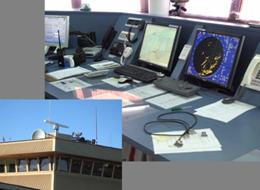
EUROSUR will bolster information exchange and cooperation between Member States' border control authorities as well as with Frontex. For this purpose, each member state with land and maritime external borders will have to establish a national coordination centre for border surveillance, which will exchange information with other national coordination centers and Frontex via a protected communication network.
The priority given to EUROSUR was confirmed by the European Council in June 2011, which asked for the system to be further developed as a matter of priority in order to become operational by 2013 (IP/11/781).
The EU secondary low will form part of the Union’s integrated border management of the external borders and the Internal Security Strategy (See: IP/10/1535 and MEMO/10/598).
In order to improve the control of external borders, the Commission has already proposed to strengthen the overall governance of the Schengen area (for the 'Schengen package', see IP/11/1036 and MEMO/11/606) and to set up a more modern and efficient management of traveler flows at its external borders (for the 'Smart Borders' initiative see IP/11/1234 and MEMO/11/728).
Short history
In 2008, the Commission adopted a Communication examining the creation of a European Border Surveillance System (EUROSUR) and set out a roadmap for the development, testing and implementation of the system (MEMO/08/86).
Accordingly, EU member states
are currently setting up national coordination centers for border surveillance,
which will be
the single point of contact for real-time data, information and intelligence
exchange between border guards, coast guards, police and other
national authorities as well as with Frontex and other national coordination
centers.
In November 2011, Frontex interlinked on
a pilot basis with the first six national coordination centers (Finland,
France, Italy, Poland, Slovakia and Spain) via a protected
communication network. The remaining national coordination centers of member states
will be connected in 2012 and 2013.
Together with member states and other EU agencies, Frontex is currently developing the other components of EUROSUR, which focus in particular on the detection of small vessels used for smuggling human beings as well as drug trafficking.
Perspectives
Under the EUROSUR mechanism, EU member states' authorities responsible for border surveillance (border guards, coast guards, police, customs and navies) will be able to exchange operational information and cooperate with each other, with Frontex and with neighboring countries. The increased exchange of information and the use of modern surveillance technology introduced by EUROSUR can also be vital for saving the lives of migrants attempting to reach the shores of EU Member States in small and unseaworthy boats that are very difficult to track.
"EUROSUR will help detect and fight criminal networks' activities and will be a crucial tool for saving migrants who put their lives at risk trying to reach EU shores," said Cecilia Malmström, Commissioner for Home Affairs ''The new system will contribute to an integrated border management system whilst ensuring that fundamental rights, data protection and the principle of non-refoulement are respected."
Reference: IP/11/1528, 12 December 2011
The exchange of information in the framework of EUROSUR will take the form of graphical interfaces presenting data, information and intelligence, so-called “situational pictures”. These situational pictures will be established at national and European level and will be structured in a similar way to facilitate the flow of information among them. In order to improve the capability of detecting small vessels, Frontex will also set up a service for the common application of surveillance tools, combining, among other things, satellite imagery with information derived from ship reporting systems.
This will increase the possibility of identifying and tracking down the routes used by criminal networks. The fact that traffickers are currently using small wooden and glass-fibre boats for smuggling both human beings and illicit drugs poses a major challenge to law enforcement authorities because it is extremely difficult to detect, identify and track such small boats on the high seas.
The present Regulation’s draft will be discussed by the European Parliament and the Council with a view to making EUROSUR operational by the end of 2013.
For more information see:
- Homepage of Cecilia Malmström, Commissioner for Home Affairs
http://ec.europa.eu/commission_2010-2014/malmstrom/welcome/default_en.htm
- Homepage DG Home Affairs:
http://ec.europa.eu/dgs/home-affairs/index_en.htm
- For further information on EUROSUR see:
http://ec.europa.eu/home-affairs/policies/borders/borders_crossing_eurosur_c_en.htm









 «The Baltic Course» Is Sold and Stays in Business!