Analytics, Employment, Latvia
International Internet Magazine. Baltic States news & analytics
Wednesday, 17.06.2026, 20:38
Rise in unemployment in Latvia slows in February
 Print version
 |
|---|
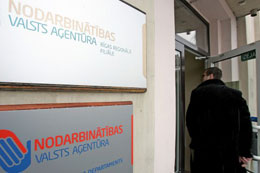
As LETA was told by SEA Director Baiba Pasevica, forecasts have been made that the unemployment rate will not grow as quickly this year as it did in the first and fourth quarters of last year. In terms of the rate of increase, the situation is similar to April 2009; however, the number of registered unemployed in the country stands at 187,762.
Moreover, Pasevica points out that in some regional branches of the SEA, the unemployment rate remained unchanged last week, for example in Jurmala, Liepaja, Balvi, and Aizkraukle. The SEA director judges this to be a positive sign.
The lowest unemployment rate is in Riga (12.6%), with the highest rate in Latgale province (21.9%), with the exception of Daugavpils, which has an unemployment rate of 13.9%.
Among the major cities and towns of Latvia, the highest unemployment rates were in Rezekne (24%) and Liepaja (19.3%).
The fastest increases in the rate were recorded at the SEA branches in Kraslava, Jelgava, Aluksne, and Bauska.
There are 1,612 job vacancies registered on the SEA database, which means that there is a competition of 116 registered unemployed for each vacancy.
As reported earlier, the unemployment rate at the end of January reached 16.6%.
According to Pasevica, the data shows that the largest section of unemployed people are unskilled workers and those who have no fixed profession. However, high unemployment can be seen in practically all areas, irregardless of education level.
Pasevica predicts that the unemployment rate is likely to continue to grow until the middle of the year; however, the rate of increase will be less than last year.









 «The Baltic Course» Is Sold and Stays in Business!