Baltic States – CIS, Belarus, Latvia, Railways, Transport
International Internet Magazine. Baltic States news & analytics
Friday, 24.04.2026, 02:21
Sanctions against Belarus could cause considerable losses for Latvian Railroad
 Print version
 |
|---|
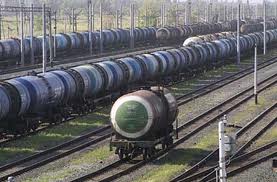
33.8 million tons or 57% of the total amount of LDz cargo were transported between Latvia and Belarus in 2011, including transit through Belarus, as the company informed Nozare.lv.
Last year, 20.9 million tons of cargo were transported between Latvia, Russia, Kazakhstan, Ukraine and other countries via Belarus, writes LETA.
LDz previously explained that if the company's cargo volumes reduce, a considerable infrastructure cost burden will weigh heavily on the remaining cargo routes. Passenger transport fares will also be affected by this.
Moreover, Latvia's competitiveness as a transit corridor will also decrease. Approximately one-third of LDz employees work in Latgale, where the registered unemployment rate is the highest.
If the European Union imposes economic sanctions against Belarus, Latvia will lose hundreds of millions of lats, Latvijas Dzelzcels (LDz) President Ugis Magonis told Nozare.lv
According to Magonis, if Belarus decides to change its transit corridors, it will be nearly impossible to reverse these changes even under the most beneficial conditions.
"It will not be possible to reroute transit cargo to the Latvian-Russian railroad boarders in the nearest future. Their capacity is too limited. If Belarus changes its transit corridors, Russia will do the same, taking into account that large cargo volumes are transported from Russia via Belarus. LDz could gain additional cargo during the next few years, since Russia will even out its timber and oil product transportation tariffs in 2013. Therefore the fact that Belarus transport corridor could become unavailable is alarming," emphasized Magonis.
Magonis pointed out that the bloc's sanctions could seriously affect Latvia's transit sector, especially the volume of cargo transported by rail. If Belarus opts to change its transit corridors, the volume of freight transported by rail could reduce by more than one-half. Freight transportation between Latvia and Belarus constitutes nearly one-half of the total volume of cargo. According to cargo nomenclature, Belarus is the largest exporter of oil products and chemicals through Latvia and its ports.
The sanctions could also lead to considerable layoffs, since the number of LDz employees and their salaries are closely linked with the company's cargo volumes.
As reported, on March 23, Foreign Minister Edgars Rinkevics (ZRP) will take part in a meeting of European Union foreign ministers in Brussels. The ministers will discuss the situation in Belarus, Syria and assess the EU Strategy for Security and Development in the Sahel, the EU Foreign Affairs Council's homepage reports.
Rinkevics previously said that the European Union's sanctions against Belarus must not affect the economies of EU members. ''These sanctions must have a clear criteria, and must not influence the welfare of Belarus' residents, as well as the economies of EU members. This will continue to be our position in discussions within the EU."
The bloc's sanctions against Belarus could cause a loss of EUR 480.9 million to Latvia, Latvian Employers Confederation's Director General Liga Mengelsone told the Nozare.lv business portal last week.









 «The Baltic Course» Is Sold and Stays in Business!