Baltic States – CIS, Energy, EU – Baltic States, Latvia, Legislation, Lithuania, Nuclear power plant
International Internet Magazine. Baltic States news & analytics
Wednesday, 17.06.2026, 21:20
Grybauskaitė: EU must tighten nuclear safety requirements
 Print version
 |
|---|
"We have to ensure safe nuclear energy. I will be actively seeking that the European Council takes Lithuania's proposals into account in the near future and adopts a decision to tighten the requirements for radiation safety and security of nuclear power plants both within the European Union and in third countries, by involving relevant international organizations in this process. This must become a shared responsibility of the whole European Union," President Grybauskaitė said.
The European Council meets on 24-25 March in Brussels to discuss the EU Competitiveness Pact, issues related to the establishment of the European Stabilization Mechanism, and the situation in Libya and in Japan.
Lithuanian Prime Minister Andrius Kubilius said in an interview with radio station Ziniu radijas that the "as-quickly-as-possible principle" could not be applied to the construction of nuclear power plants, especially considering the current nuclear crisis in Japan, informs the news agency naviny.by. "I hope that this will be understood by not only our neighbor Belarus, whose notion of international, global processes is sometimes rather strange, but also by our neighbor Russia, which invests in and is ready to provide technologies for the Belarusian nuclear power plant and simultaneously plans to build a nuclear power plant in the Kaliningrad region," Lithuania's news site Delfi quoted Kubilius as saying.
In a statement issued on March 16, the Lithuanian foreign ministry said that, together with nuclear safety and environmental agencies, it was working to ensure that Belarus' nuclear power plant was safe and located sufficiently far from Vilnius. "All possible international means, international forums and bilateral contacts have been used and will continue to be used for this," the statement said. According to Lithuanian experts, the Belarusian government's report assessing the possible environmental impact of its nuclear power plant project does not contain enough information about the risks for Lithuania and the criteria for selecting the construction site, the statement said. That is why Lithuania has put many additional questions to Belarus, which still remain unanswered, the statement said.
On March 14, the Lithuanian foreign ministry issued a note of protest over Belarusian Deputy Economy Minister Mikhail Mikhadzyuk's claim that Lithuania had made no objections to the report. Despite growing criticism, the Lithuanian government has not abandoned its plans to build a nuclear power plant in the place of the closed Soviet-era Ignalina plant. The new reactors are expected to be put into operation around 2020. Belarus' nuclear power plant, which is to have a generating capacity of around 2,400 megawatts, is to be built in the Hrodna region some 10 miles from the Lithuanian border. The first unit of the plant is scheduled to be put into operation in 2017 and the other one in 2018.
The events in Japan did not deter Latvia from willingness to contribute to the construction of a nuclear power plant in Lithuania, confirmed Latvian Prime Minister Valdis Dombrovskis on his visit to Lithuania. "We also believe that the events in Japan will stimulate a new discussion concerning nuclear power energy safety, stricter safety standards, however, what concerns Latvia's interest in participation in the project, it remains unchanged," said Dombrovskis in prime ministers' joint conference on Friday.
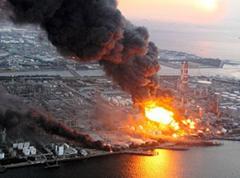
The head Lithuanian government Andrius Kubilius predicted that the events in Japan will result in higher standards of nuclear power energy policy, which will guarantee the safety of such projects. "We hope that the problems will be brought under control with the least possible loss, we will be looking forward to the international assessment and conclusions, concerning the roots of these tragic events. We are positive that the events will result in higher safety standards for future nuclear power plants, be they built in Lithuania or Belarus or somewhere else. We hope that the conclusions will help ensuring the safety of such energy projects in the future, "said Kubilius President Dalia Grybauskaite thinks that the EU must tighten nuclear safety requirements.









 «The Baltic Course» Is Sold and Stays in Business!