Book review, EU – Baltic States, Integration
International Internet Magazine. Baltic States news & analytics
Wednesday, 17.06.2026, 20:24
Modern Europe – the miracle made possible!
 Print version
 |
|---|
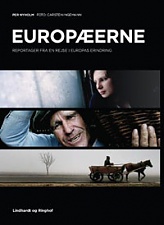
When Per Nyholm’s book appeared on my desk it made me think: am I really a European? And what does it mean to be a European?
The book is published at a time when there is a focus on what the “uniting” factors are, which stand behind the notion of “Europeanisation”. It gives thoughts to many relevant questions, such as:
-
What qualities does one have to possess in order to qualify as a European?
-
What does it really mean, the EU motto “united in diversity” (to me it sounds like a cocktail with too many ingredients!)
-
With 23 official languages in the EU, isn’t the idea of a European “family” a constriction just as chaotic as the tower in Babylon?
-
What makes it attractive for the member states to belong to this European family?
The book’s subtitle translates something like “a trip through European memory”. It does not answer these questions but it leaves the reader with a warm feeling for what some of the reviewers in Denmark call “the miracle which is Europe”.
“The book is not an objective one”, writes Per Nyholm in his introduction, “and it is not at all a historic or political work. It is a personal story about a continent with a destiny which lies close to my heart”.
As a war correspondent and later art reporter Nyholm has worked in many places on the European continent. The more he gets to know it – the more he sees it as a fairytale.
Nyholm combines a deep historical knowledge with memories from many years of covering the recent wars in Balkan. His book represents quite a noble endeavor, which is materialized in almost seven hundred pages brightened with the photographer Carsten Ingemann’s beautiful photos.
Per Nyholm is certainly right when he emphasizes that the European Union is a unique – and unprecedented – example of uniting more than two dozens wildly different nations under one simple idea. Any opposition to it, he argued, would be regarded as anachronism personified in a highly provincial manner – to say the least.
Anyway, it is relevant to think on: do they really strive for more united development, these 27 member states?
Nyholm is aware of the uncertainty and talks about that numerous, more and more not-European issues: e.g. national growth, inflation, unemployment, the attitude to climate change, the way to approach the present financial-economic crisis.
Europeanisation’s perspective
The author’s “memories’ trip” starts in Rome. Since 1980 he has been living here – an understandable choice for a man so occupied s with European civilization over the centuries.
The trip, which lasted two years, ends in Denmark, where the author was born and has his roots. Between Italy and Denmark are reports from about 30 European countries. The trip lasted several years and took him from Ukraine in the east to Portugal in the west and from Norway in the north to Turkey and Malta in the region’s south. Carsten Ingemann illustrates – and supplements – the trip splendidly with colorful photos that are so beautiful that they deserve a separate “European exhibition”.
The book mixes trips down memory lane with analysis of here-and-now. Nyholm visited most of the European states’ capitals and distant provinces and talked – with equal enjoyment – with intellectuals and farmers.
Choosing among the Europe’s many old cities Bratislava comes out as the number one on Nyholm’s list of the most European cities. To him the former capital of the Hubsburg empire represents the kind of Europe that he loves: A dignified and peaceful monument which communism dared not destroy. He finds Bratislava tactfully touched by time – and carefully restored.
The author admits that the long trip didn’t really result in finding “the spirit of Europeanisation”.
Maybe, after all, it wasn’t even his purpose!
Only a few generations ago the European continent was a torn apart territory by wars and ideological fanatism. Today it is a union of 27 sovereign and democratic states.
Nyholm’s book certainly makes us aware of this. He achieves to make us see, that Europe is NOT – as they sing in the Don Quixote musical – the impossible dream. Europe is becoming a possible dream!






 «The Baltic Course» Is Sold and Stays in Business!