Employment, EU – Baltic States, Legislation, Port, Transport
International Internet Magazine. Baltic States news & analytics
Tuesday, 09.06.2026, 07:00
European ports: new social dialogue between port workers and employers is needed
 Print version
 |
|---|
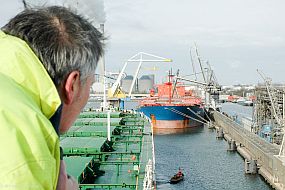
About 1.5 million workers are employed in European ports, with the additional amount employed indirectly across the 22 EU maritime Member States.
On 23 May 2013, the Commission presented to the European Parliament and to the Council a legislative proposal for modernizing port services and attracting port investments in the EU. In this difficult economic period, ports and maritime logistics are continuing their recovery, facilitating trade for EU export and contributing to the competitiveness of European industries.
This new European social dialogue committee will examine the challenges faced by the sector and help contribute to its long term success. Ports are both engines of economic development and sources of prosperity; more cargo, cruise ships and ferries in the ports means also more jobs and new opportunities.
New challenges
In the next 15-20 years, European ports will face a challenging growth in traffic; they need to adapt to new generations of ships coming into service, new energy trades in gas and biomass and new logistic complexities regarding terminal operations and connections of ports with the hinterland.
This prospected growth will create many new jobs, in particular for young workers. However, the technology developments are changing training requirements. An increased demand for technical training will go hand in hand with a stronger focus on IT technologies applicable to cargo-handling and logistics inside the port. At the same time, these new requirements could affect working conditions and give rise to new risks and hazards for workers.
Commission’s opinion
Commission Vice-President Siim Kallas, responsible for transport said: "European ports have a huge potential to create quality jobs, attract investment and contribute to growth. The legal framework that I proposed on 23 May will simplify procedures, ease access to port services and attract investments, along with the Trans-European Transport Network guidelines and the Connecting European Facility being agreed by Parliament and Council. However, port workers must also be well-trained and their working environment adapted. The social dialogue will contribute to it."
László Andor, European Commissioner for Employment, Social Affairs and Inclusion commented: "We need to reinforce the role of social partners at all levels if we are to come out of the crisis and preserve the benefits of our EU social model and social cohesion. The discussions in the ports social dialogue committee will contribute to improving the working lives of dockers, for example on improved health and safety at work and working conditions. The involvement of social partners in government reforms is vital, in particular in a context of modernisation of port infrastructure and government spending cuts".
Reference: European Commission, Press release IP/13/562, Brussels, 19 June 2013.
The new committee had its inaugural meeting in Brussels on 19 June 2013 bringing together the European Sea Ports Organisation, the European Federation of Private Port Terminal Operators, the European Transport Federation and the International Dockers Coordination Europe, representing dockers and port workers in European ports.
The committee's work programme for the next years reflects the commitment of the social partners to address these challenges jointly, covering topics such as: training and qualifications, attractiveness to young workers, health and safety as well as promotion of female employment.
As part of an action plan accompanying its legislative proposal, the Commission agreed to provide technical and administrative support to the social dialogue in order to address these common challenges.
European social dialogue refers to discussions, consultations, negotiations and joint actions involving organisations representing the two sides of industry (employers and workers). It is part of the European social model and is recognised as a tool of good governance and of social subsidiarity. It has also demonstrated its role as an instrument of social resilience, helping to mitigate the negative social impact of a recession and crisis.
For more information see:
= Commission proposes upgrade for 300 key seaports IP/13/451;
= Europe's Seaports 2030 MEMO/13/448;
= European social dialogue: http://ec.europa.eu/socialdialogue;
= European ports – an engine for growth at: http://ec.europa.eu/transport/modes/maritime/infographics_en.htm
= László Andor's website: http://ec.europa.eu/commission_2010-2014/andor/index_en.htm;
= http://europa.eu/rapid/press-release_IP-13-562_en.htm?locale=en







 «The Baltic Course» Is Sold and Stays in Business!