Baltic States – CIS, Lithuania, Tourism
International Internet Magazine. Baltic States news & analytics
Tuesday, 09.06.2026, 13:21
Palanga experienced a tourists flow from Russia in 2010
 Print version
 |
|---|
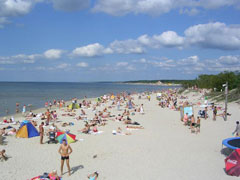
Palanga Hotel and Restaurant Association President Gintaras Siciunas claims "Russian tourists make up a considerable segment of the resort’s tourist flow. It is significant every season, but this summer it has gone 15 – 40% upwards from the usual level. Besides, we do see considerably more Spanish, French, Italian and Scandinavian tourists in the resort," as The Baltic Times reports.
With more direct flights to Vilnius and particularly to Kaunas, with its Ryanair cheap-flight 40th worldwide base, Lithuania is reporting a 20 – 40% tourist hike this summer, writes LETA/ELTA referring to the newspaper.
The increased tourist flow does not result in bigger turnover at local hotels.
"We see a 30 – 40% guest volume increase in Vilnius Radisson Blu Hotel. However, it does not counterbalance our revenue decrease due to hiked-up value-added tax (VAT), from five% to 21% since 2008," Radisson Blu Hotel director Kestutis Kazlauskas maintained to The Baltic Times.
Evalda Siskauskiene, Lithuania's Hotel and Restaurant Association (LHRA) director, sees tourist number in the summer 2010.
"We have had more foreigners this year than previous year, when thousands of people came for Lithuania's millennium anniversary. In my opinion, it is not only related to the improved transport connection with Lithuania, but probably also the reason is foreign tourism market recovery," Siskauskiene points out.
According to her, this summer Lithuania welcomes multinational inflow of tourists of previously more reluctant Spain, Finland, Italy and France, the number of Russian, German and Belarus tourists has also increased.
Had the VAT been slashed to 9 or 11%, as is being deliberated, the national tourism sector would have bounced back to the pre-crisis level, the LHRA president is convinced. Also, had the Slavic tourism-crippling hurdles been lifted from the Lithuanian side, local hotels and restaurants would have cashed in on the flow in a geometric proportion, she asserts. This summer, Lithuania’s embassies in Minsk and Moscow have been overflowing with Russians and Belarusians attempting to receive Lithuanian (Schengen) tourist visas. However, the embassies, downsized due to austerity measures, could not handle the abundance of the applicants in a fast enough period of time, often making them wait for a visa nearly two months. It is estimated that because of diplomatic mismanagement, Lithuania has turned its back on thousands of its closest neighbors, Siskauskiene claims.
In order to set off losses due to a 16% VAT spike, many hotels, including unrated motels and luxury hotels, have slashed their prices 10 – 40% this summer. With the tourist flow increase, the low prices inched up gradually in most hotels, reaching the usual summer prices in most of them. As hotels differ a lot in their capacities, marketing policies and, most importantly, locations, conclusive generalizations regarding their effectiveness should not be drawn upon all of them, Siskauskiene suggests.
"Obviously, all hotels have been affected by the increased VAT and the general trends in the industry. However, you cannot put on a par a hotel in the Palanga resort, one in Vilnius or another one in a provincial town," the LHRA head emphasizes.
Russian guests are always welcome at Palanga's resort hotels because they are known as good clients, staying for quite a long period of time, and being rather boon.
"High season is about to end, our hotel’s occupancy is still 80%, and Russians account for a whopping 90% of the guests," says Palangos Vetra Hotel Reservation Department head Roman Stulov.
In Udra village, in Southern part of Lithuania, Udra motel owner Stasys Dumbliauskas was complaining over his deteriorated motel business.
"Before, it was going quite well. Located at the crossroads, the motel, especially in summer, used to be nearly always full, accommodating tourists, truckers, bikers and motor cyclists. This summer, I saw only a few bookings, as all seven rooms stayed unoccupied for most of the time. Before the summer, when reading reports on the hotel industry's possible recovery, I was hoping the better times are around the corner. However, at the end of the summer, I see it was not the case," Dumbliauskas said to The Baltic Times.
Lithuania's Hotel and Restaurant Association director Siskauskiene has not yet observed signs of tourism recovery. However, she sees high potential of the tourism business in Lithuania. Still she points out at low priority of tourism sector in Lithuania. "Every third hotel in Vilnius is for sale," she notes. The expert emphasized low chances of survival for small town hotels Lithuania and poor tourism-sector related political measures.









 «The Baltic Course» Is Sold and Stays in Business!