Direct Speech, EU – Baltic States, Forum, Latvia, Legislation
International Internet Magazine. Baltic States news & analytics
Tuesday, 09.06.2026, 13:19
Memorandum by members of the roundtable on the problem of right-wing radicalism in the Baltics
 Print version
 |
|---|
Right-wing radicalism is increasingly rooted in ethnic politics where requirement of the ultra-right politics for the preferential conditions for the representatives of the majority ethnic group are being realized.
We point out the inaction of the authorities in regard to public statements about superiority of one ethnic group over another, including anti-Semitic slogans. Thus, Latvia's security police refused twice to initiate criminal proceedings against the local nationalist, U. Freymanis, who, a year ago, on March 16, 2011 on a television program "Without censorship" and later, on July 1 of the same year at a rally, publicly called for the massacre of Jews.
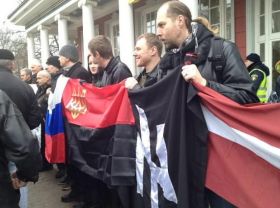
Annual parades of the veterans of Waffen SS, the neo-Nazis and radical nationalists became a symbol of growth of far-wing radicalism in the Baltic countries. In Latvia and Estonia, these processions coincide with historic dates of battles of Waffen SS legions with the Red Army divisions that were liberating Europe from Nazism as part of Anti-Hitler Coalition. These events are attended not only by the veterans of the military forces of Nazi Germany, but also by political and public figures of the aforesaid countries, SS veterans, representatives of neo-Nazi groups from abroad, and parliamentarians, including members of the ruling coalition. Earlier, representatives of Latvian and Estonian governments as well as its defense agencies participated in these processions.
Despite the recommendations of the European Commission against Racism and Intolerance (ECRI) to prohibit these activities as glorifying Nazism, despite attempts by the municipal authorities to prevent these marches under the pretext of security threats, judicial authorities, with tacit support of governments and ruling parties of the aforementioned countries, allow these annual Nazi demonstrations to proceed.
Participants of the “Roundtable” welcome the position of the authorities of Estonia and Latvia, according to which, the days of the Waffen SS legionnaires are not officially celebrated in these countries. At the same time, while aware of the tragic history of the Baltic states, recognizing everyone’s right for freedom of assembly, participants of the “Roundtable” believe that holding marches of the SS veterans on days marking military clashes of Hitler’s army with Allies’ forces, and choosing a center of a European capital as a place to conduct commemorative events is glorification of Nazism. It is also an insult to the memory of Nazi victims and all citizens of the countries-members of anti-Hitler coalition.
Active support of these activities on the part of some media makes them attractive to young people. Modern interpretation of the events of those years in the Baltic States’ schools not only does not disprove the view of Waffen SS veterans as heroes, but further enhances the misconceptions of students. All this is not only unacceptable from the standpoint of Paris Charter of the Council of Europe, the EU fundamental rights Charter and international norms, but also poses a serious threat to the modern world community.
Glorification of Nazism as well as recent attempts in Eastern Europe to impose equal responsibility of the outbreak of the World War II on German y and the Soviet Union, not only leads to the revisions of its results and the Nuremberg Tribunal decisions, but also contributes to de facto legitimization of Nazism as an ideology and practice. We turn down any attempt to justify the past of collaborators from Latvia with Nazi Regime and contemporary policies discriminating national minorities whom right-wing radicals are trying to “paint” as occupants for over 20 years.
All this greatly increases the risk of inter-ethnic clashes in the Baltic states and also contributes to the revival of fascism and Nazism, the spreading of this threat to other European countries, and represent a threat to European values and fundamental principles of democracy and human rights. Responsibility for this lies with the authorities of Baltic countries.
We draw the attention of the governments of Latvia, Estonia and Lithuania to the fact of strengthening influence of the right-wing forces in these countries. We urge these governments and Parliaments as well as the Public to implement the recommendations the European Commission against Racism and Intolerance as well as the Framework Convention for Protection of national minorities with respect to human rights and glorification of Nazism.
We further believe that the international community should take a more active stance on these issues, and we appeal to the European and American institutions, Parliaments, governmental and public organizations of the United States and EU countries to give their assessment to the public processes taking place in these countries.







 «The Baltic Course» Is Sold and Stays in Business!