Banks, Economics, Estonia, EU – Baltic States, Financial Services
International Internet Magazine. Baltic States news & analytics
Tuesday, 09.06.2026, 08:04
Borg in Tallinn: Swedish banks should treat Baltic States as their homeland
 Print version
 |
|---|
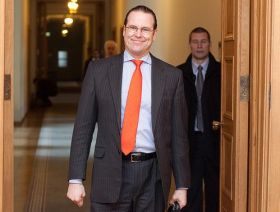
"They must do the right thing, be responsible and meet both home and host rules. This should avoid banks collapsing in the way we have seen in the rest of the European Union," said Borg.
Borg was named Europe's best finance minister in 2011, writes LETA.
He pointed out that when he looks at countries like Finland, it becomes clear that if the government runs the economy well, the country can be successful also in the eurozone.
"But if you make mistakes like it has happened in Latvia or Iceland, you can fail also outside the eurozone," said Borg.
As reported, Swedish Finance Minister Anders Borg has recently urged Latvia not to delay its goal of joining the euro-zone in 2014.
As reported, euro-area banks are becoming less happy to lend and consumers are more reluctant to borrow, according to an authoritative new survey out Wednesday (February 1), EU Observer reports.
The European Central Bank (ECB) in Frankfurt in the past six weeks polled senior loan officers in 124 banks of various sizes across the 17-country single-currency zone.
The answers that came back showed a "surge" in the level of fear on both sides of the table in a mini-credit crunch that will make it harder for Europe to avoid recession in the coming year, informs LETA.
Germany was the "notable exception" in terms of willingness to lend on the bank side.
The ECB noted that the biggest "net tightening" of bank credit last quarter came in the areas of loans for large corporations and for house mortgages – by 19% and 11%, respectively, compared to quarter three.
It said around half of all banks in all euro-using countries also reported "significant difficulties" in getting other banks to lend them money for day-to-day operations.
It blamed the trend on worries about exposure to bad sovereign debt, "weak expectations" of economic growth in 2012 and new EU rules requiring banks to keep more rainy-day capital in reserve.
The ECB also noted consumers are borrowing less for other purposes, with lower household spending on "durable goods" such as washing machines or cars and "a decrease in consumer confidence" generally.
The fund's chief economist Olivier Blanchard last week said: "The world recovery, which was weak in the first place, is in danger of stalling ... But there is an even greater danger, namely that the European crisis intensifies. In this case, the world could be plunged into another recession."









 «The Baltic Course» Is Sold and Stays in Business!