Financial Services, Latvia, Legislation, Taxation
International Internet Magazine. Baltic States news & analytics
Tuesday, 09.06.2026, 13:20
Latvian politicians promise not to increase taxes, but intend to change tax system
 Print version
 |
|---|
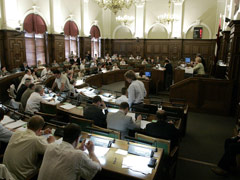
At a discussion organized by the business portal Nozare.lv, representatives of the Union of Greens and Farmers, Unity, All for Latvia-For Fatherland And Freedom/LNNK, and For a Good Latvia were unanimous that the overall tax burden should not be increased; however, changes are necessary to the tax system in order to reduce the level of taxation of labor and move the tax burden onto real estate and consumers, writes LETA.
Armands Krauze, who is standing for election on the Union of Greens and Farmers list, noted that his party wished to introduce a progressive income tax with a threshold of LVL 1,000. This tax would be introduced in stages, with a parallel rise in the non-taxable level for salaries, thus creating a socially fair tax system.
However, Martins Zemitis from the alliance For a Good Latvia noted that only 5% of the population receive a salary in excess of LVL 1,000, and that the introduction of such a progressive tax would bring the government less than LVL one million in additional revenue. Zemetis noted however that this move would allow the raising of the non-taxable minimum amount by one lat.
Economy Minister and Unity representative Artis Kampars expressed his certainty that the tax burden should be shifted from labor onto real estate and consumers, where Latvia still has among the lowest tax rates in Europe.
All for Latvia! – TB/LNNK representative Girts Lapins noted that his party was against any major changes to the tax system, but allowed that some specific measures were required. These would be aimed in two directions – increasing competitiveness, and moving the tax burden from labor onto capital. Lapins claimed that subsidiaries of the country's banks are currently actively buying real estate which is then left empty, and suggested doubling or even tripling the tax rate on such properties in order to prevent artificial stimulation of the real estate market and housing prices.









 «The Baltic Course» Is Sold and Stays in Business!