Baltic States – CIS, Direct Speech, Ecology, Energy, EU – Baltic States, Forum, Latvia, Transport
International Internet Magazine. Baltic States news & analytics
Tuesday, 09.06.2026, 07:00
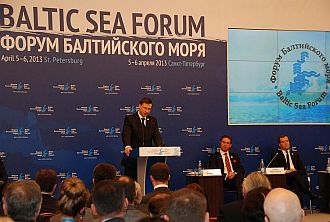
Speech by Valdis Dombrovskis at the Baltic Sea Forum
 Print version
 |
|---|
| Photo: flickr.com |
Excellencies,
Ladies and Gentlemen,
Let me begin by thanking Prime Minister Medvedev and the City of Saint Petersburg for hosting this conference.
I am glad to see the Russian Federation continuing the efforts first initiated by the former president of Finland Ms Tarja Halonen. At present, we already see the first practical results of the commitments made three years ago. However, a lot more remains to be done.
In the past few years we have been seeing our region’s maritime agenda being integrated into discussions at the wider European level. We all recognize that the Baltic Sea is critical to the whole region. It is only healthy and productive sea that can ensure green economy and sustainable marine and maritime economy growth also known as blue growth. Furthermore, we need to address the issues of energy and climate change.
Latvia highly values the use of various cooperation platforms and thinks that integrated and coordinated governance is a key factor for the sustainable development of the Baltic Sea Region. The Council of the Baltic Sea States and the Helsinki Commission form the basis for addressing specific needs and joint challenges in the Baltic Sea region. They allow for focused implementation initiatives and better coordination. The EU Strategy for the Baltic Sea Region, which is a high priority for the EU, brings an added value. The HELCOM Baltic Sea Action Plan is a fundamental building block of the Strategy for the Baltic Sea Region towards the common objective to save the sea.
It is essential, that actions should be taken in all sectors, both on land and at sea, including shipping, to meet the requirements of the Baltic Sea Action Plan. A good example is the effect that the investments in the phosphorus load reduction from municipal waste water sector are having, and how they are helping to actually implement a recommendation from the HELCOM Baltic Sea Action Plan.
Our top priority needs to be cross-border cooperation to insure good ecological status of our waters. Point source land based pressure on the environment directly influences the broader marine environment; therefore we must continue to address trans-boundary issues such as responsible management of our water and wastewater.
Pristine nature is one of Latvia’s key assets. Latvia promotes green economy and sustainable management of the natural capital. Latvia, through its National Development Plan until 2020, has decided to pursue an “economic breakthrough.” Such breakthrough cannot disregard the safe and sustainable use of our natural resources. Therefore, our development perspectives are clearly defined in the 2030 Sustainable Development Strategy, which again integrates sustainability practices.
As global competition and cooperation increase we give more value to what is different and unique. We have to use our green potential in an efficient and productive way to have a competitive edge. We not only encourage next generation production but also environmentally conscious consumption. Such new economy has to be competitive for it to succeed. That is why a month ago Latvia invited the attendees of the Northern Future Forum taking place in Riga to focus on the competiveness of green economy.
Conventional economic practices can be made greener. For example, it is becoming increasingly important to identify cost-effective solutions to cut down on pollutant emissions. These solutions might be sought by businesses or lead by governments. In this regard Latvia has already introduced binding restrictions on the trade of laundry detergents containing phosphates. More and more businesses are now aware of the opportunities provided by the sound and responsible use of available resources.
For the first time in Latvia there are ecological cleaning products – two types of dishwashing liquids, which do not contain phosphates. They are produced by first such manifacturer in the Baltic States. This product’s high level environmental performance has now been acknowledged by their awarding of the official EU Ecolabel licence. We celebrate this success. This is an example of manifacturers who dare to explore new frontiers and strive to become leaders.
Companies in Latvia have decided to lead through the commitments of the Baltic Sea Action Group to raise the social awareness about the ecological health of the Baltic Sea, ensure safe management of hazardous waste, attempt to introduce biodigradable car lubricants, organize area clean-up events, and comit to sustainable practices in agriculture and the hospitality business. These are excellent examples of environmentally responsible leadership of private industry in Latvia.
Economy cannot run without safe and reliable energy sources, which is yet another priority area for regional cooperation. There is an increased interest in developing economic activity at sea, including offshore renewable energy. We should be wise about making development steps as we all share the sea. We strongly support the application of maritime spatial planning, which is a basic instrument included in the Latvian law for implementation of the ecosystem approach to human activities at sea. In this respect, we appreciate cooperation between HELCOM and VASAB, which is a real success story to implement the mandate given by the Baltic Sea Action Plan concerning the maritime spatial planning in the cross-border context.
Ladies and gentlemen,
And here is another overarching issue that cannot be ignored – climate change. Scientific research leaves no doubt that climate change affects the Baltic Sea region. Mitigation of and adaptation to climate change has to be the region’s priority. Climate change risks to undermine efforts that are being taken to combat pollution of the sea and impact the resilience of the ecosystem, as well as it can influence coastal and offshore development. In the last few years, we have experienced increased levels of precipitation, more frequent storms, harsher drought periods, coastal erosion, changes in the inland water regimes – all of this is causing effects on the economic and social spheres of our lives. Climate change creates additional pressures on the fragile ecosystem of the Baltic Sea.
Every country must step in to combat climate change. Latvia has already reached a 50% reduction of greenhouse gas (GHGs) emissions compared to their levels in 1990. Renewable energy share comprises one third of our total energy consumption. We are fully aware that further cuts in emissions pose financial and technological challenges. This is the field in which we see a potential for closer cooperation in the Baltic Sea Region. We can work together to improve energy efficiency and expand the use of renewable energy to minimize the impact on climate that our region is making.
Latvia supports the efforts made by the European Commission towards development of a joint strategy. We, however, note that the Baltic Sea Region goes beyond the EU borders. This means that we have to find platforms for better cooperation with non-EU neighbours.
Latvia has begun work on the national climate change adaptation policy. We know that other countries are also working on this issue. We suggest that the region supports closer cooperation between scientific communities and decision making institutions which would raise our common capacity.
Latvia takes seriously its commitments towards common action to combat climate change. Latvia, jointly with other EU Member States, approved agreement of the Kyoto Protocol’s second commitment period that will last from 2013 – 2020, and developed effective mechanisms for implementing climate actions. An important issue that we have to consider is a strategic discussion related to 2015 agreement for post-Kyoto period. Latvia invites all Baltic Sea Region states to actively participate in the preparatory process that is expected to be finished by the end of 2015. We invite all parties to use the Baltic Sea Region high level meetings and other mechanisms as a discussion platform on the future of the Kyoto Protocol.
Let me conclude by noting that the Baltic Sea Region is very important to not only the countries surrounding the sea but also to the wider Pan-European community. It is very much up to us here in the region to make decisions that will affect the future of the sea. We should support an ecosystem approach to the management of the sea and the nearby industries affecting it. We need to support next generation environmentally responsible economy and renewable energy. We can and need to become more integrated and have closer cross border cooperation, make bold and united decisions concerning the issues of climate change and involve all parties of the region.
I would like to again thank the organizers and invite everyone to fruitful discussions about the shared and sustainable future of the Baltic Sea Region. Thank you.





 «The Baltic Course» Is Sold and Stays in Business!