Education and Science, EU – Baltic States
International Internet Magazine. Baltic States news & analytics
Tuesday, 09.06.2026, 05:54
Vademecum for the region: SENT, the Network of European Studies has been launched
 Print version
From history to present
To gather representatives from about 35 European states in the central Italian Forli-Cesena Province, next to Bologna, was not a coincidence: this part of the country has been a “laboratory” where different cultures and experiences have met over the centuries. Now it was the turn of researches in European studies from all over the continent. More than 65 researches, scientists and teachers from more than 30 universities in Europe discussed the problems of European integration from numerous and broad angles.
The Forli City Council officials and those of Bologna University heart.ly welcomed SENT participants.
Quick start
 |
|---|
It might sound unbelievable, but the SENT organizers managed in less than half a year to bring together 67 partners from EU member states, candidate countries and a number of associated ones. All credits for that go particularly to energetic efforts of Federiga Bindi, Director of the European Office in the University of Rome Tor Vergata, General SENT-program coordinator.
She describes it as an “ambitious, far reaching project and network aiming at assessing the sates of EU studies, as well as European-idea, as it is transmitted by universities, politicians, media, etc.” Therefore, Sent’s main goal, at least during the first year, will be the mapping of European studies, as the organizers call it, to understand how the EU studies in different sectors/fields have been developing, which directions they are now taking, in order to get a comprehensive review of these studies during last years. See: www.ue.uniroma2.it.
Network’s content
Growing and rising European integration has caused jump in interest towards various European issues. The organizers have identified the following 5 disciplines in the program, which are particularly important for European integration: politics, law, economic, history, social/cultural issues; as well as several thematic fields connected to teaching and “delivering” the knowledge of the “European idea” to the public. Needless to say, that so far the EU scholars have not been very successful in transmitting that knowledge to the public and the citizens in Europe, hence the decline in support for the “European idea” in the number of EU countries. The mentioned disciplines’ and fields’ analysis has been concentrated in working groups (WG); therefore disciplinary and thematic WGs represent the core part of the project.
Learning and teaching on success stories
Exchange of good practice and achievements in European studies and teaching are regarded as a key to further European integration. In this regard Sent provides a valuable forum for discussion on teaching methods at all levels of higher education. Exchange of experience among academic staff will help to upgrade their knowledge and skills within European studies’ teaching.
The results of the WGs activity will be disseminated among various European universities providing solid background for emulation of good practices and “success stories” in both making perfect European sectors’ knowledge backlog and delivering the results to the public through modern teaching methods and tools.
Uncharted waters
At the same time the Sent organizers have had another ambitious aim, i.e. to extend the network in the field of higher education to non-EU countries promoting the EU as a center of excellence in learning around the world. In this regard the Baltic connections to Russia, Belarus, Ukraine and other neighboring countries might be useful and highly important.
There are two programs: one, Erasmus Mundus program aimed at enhancing the quality of European higher education by fostering co-operation with third countries in order to promote dialogue between people and cultures; the second one, Tempus IV is aimed at supporting and modernizing higher education in the partner countries in Eastern European periphery, in Western Balkans, Central Asia, North Africa and Middle East.
Message to the Baltic readers
 |
|---|
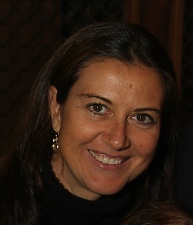
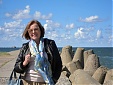
| Federiga Bindi. |
“EU enlargement to 27 member states (MS) has been the most successful political even in the modern European time”, said F. Bindi. And continued: now the new MS have to add up economic progress which is based both on shared values and better understanding of the ways towards further integration. We have to face it, Bindi said, that European studies are blossoming in the new EU member states, and above all, in the Baltic States. This makes clear the enormous interest in the SENT work from numerous EU MS and the new states’ active participation in all the working groups”.
To my mind, she said, one of the problems concerning present Baltic development has been rather ungrounded popular expectations that future membership in the Union would automatically solve all the problems. Now we can see, that a hard work is needed based on further cooperation with other Union member states. And better knowledge about the European Union would greatly help the MS to gain success in future integration efforts.





 «The Baltic Course» Is Sold and Stays in Business!