EU – Baltic States, Legislation
International Internet Magazine. Baltic States news & analytics
Tuesday, 09.06.2026, 14:19
New Commission, new appointments: winners and losers
 Print version
 |
|---|
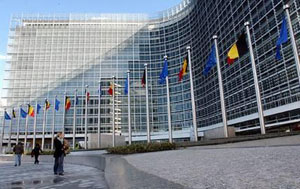
The new commissioners – one from each European Union member state – will play an influential role in pursuing Europe’s agenda in key areas such as climate change, energy policy, competition and internal harmonisation of the 27-country bloc.
The Commission’s president, Mr. Barroso is Portuguese, so his country does not get an additional commissioner.
High Representative of the EU for Foreign Affairs and Security Policy, Baroness Catherine Ashton, Britain. She will have a seat on the new Commission as vice-president.
Members of the new Commission: main portfolios for nominated commissioners
Internal market and services: Michel Barnier (France)
The internal market position, i.e. securing the four “basic freedoms” – that goods, services, people and capital can move freely across the EU-27 – is clearly one of Brussels’ key jobs. It is also one, which has become more complex and difficult, as the focus has shifted from establishing an internal market in goods to one covering services. A large element of the internal market directorate’s work is now devoted to the financial services sector – an area of considerable importance and sensitivity to many countries.
There have been some suggestions that overseeing the financial services work should be carved out into a separate job; though it is less clear exactly where the dividing line would be drawn. There have also been suggestions that other parts of the internal market portfolio could be reorganised, such as its oversight of intellectual property issues, which overlaps with at least two other directorates.
Industry and entrepreneurship: Antonio Tajani (Italy)
Lower-key than some of the big economic portfolios but still very influential in terms of big manufacturing sectors, from cars to pharmaceuticals. It also has oversight in the research-heavy space area, and a role in supporting innovation, e.g. intellectual property issues are sometimes shared, rather uncomfortably, with internal market.
Agriculture and rural development: Dacian Ciolos (Romania)
Agriculture accounts for the biggest share of the European Union budget – more than €50bn ($75bn, £45bn) a year – making the job of agriculture commissioner exceptionally advantageous among Brussels’ portfolios.
Above all, the commissioner will be at the head of the debate on reforming the Byzantine common agriculture policy (CAP), with its cumbersome system of payments and subsidies. The biggest challenge may be to preserve the CAP budget, and ease tensions between new and old member states about how the CAP budget is divided.
The commissioner may also have to address volatile prices in recent years for milk and other commodities, which have sparked outcries from both farmers and consumers. They will have to do so amid greater oversight from the European parliament, which will gain new powers over agriculture in the new Lisbon treaty.
Trade: Karel De Gucht (Belgium)
With the authority to negotiate agreements around the world, the trade commissioner is one of the few in Brussels with a truly international profile.
The trade commissioner will inherit the Sisyphean task of trying to nudge forward the conclusion of the Doha round of international trade negotiations. While those talks have sputtered, the EU has pushed for bilateral free trade agreements with e.g. South Korea and India.
In addition to those assignments, the commissioner will also have to manage trade relations with the US and China at a time when the economic crisis has led to a rise in protectionism around the world.
Climate action: Connie Hedegaard (Denmark)
It is one of the new posts created by Mr. Barroso on the requests from the member states. The commissioner will take a leading role in co-coordinating the EU’s fight against global warming and its transition to a low-carbon economy. That task will touch on existing Commission policy areas, such as trade, industry and environment. It would also make the new commissioner a point-person for the EU’s efforts to negotiate and implement a successor to the Kyoto protocol.
Energy: Günter Oettinger (Germany)
Once a relatively low-profile post, the energy portfolio has become one of the more sought-after positions in Brussels.
Günter Oettinger will be thrust into the various energy projects in Europe, including the ongoing Russia-Ukraine dispute and other oil-gas trans-European projects. More broadly, he will have to further the development of a European energy policy that acknowledges the need to reduce its dependence on imported commodities while also promoting energy efficiency, wind, solar and other sources compatible with the fight against climate change.
Home affairs: Cecilia Malmström (Sweden)
Justice, fundamental rights and citizenship: Viviane Reding (Luxembourg)
The judicial portfolio is expected to be split between two commissioners: Cecilia Malmström of Sweden gets the home affairs brief; while Viviane Reding of Luxembourg takes on a new justice, fundamental rights and citizenship role.
The main home affairs brief will assume new importance under the Lisbon treaty, with Brussels taking on areas of policy that had previously been the exclusive remit of EU member states.
The focus in the short term will be on harmonising EU policy on refugees, co-coordinating policing across the bloc and administering border policy for most EU members.
Economic and monetary affairs: Olli Rehn (Finland)
The economic and monetary affairs position has grown in importance as the financial crisis has progressed, and is now identified as one of the “big economic” portfolios coveted by member states.
Former enlargement Commissioner, Olli Rehn will have the hard task of bringing the EU’s public finances back into shape. Most member states have flouted the bloc’s rules on budget deficits, but the Commission will look to start enforcing them once the recovery is on a more solid base.
Digital agenda: Neelie Kroes (Netherlands)
Neelie Kroes, the former competition commissioner, will take over the telecoms and digital agenda from Viviane Reding.
Ms. Reding had lobbied heavily to remain in her current post. Her departure will spark vivid reactions among the larger telecoms operators, whom she has antagonised with price caps on roaming charges, one of the signature achievements of the first Barroso Commission.
Ms. Kroes is familiar with the telecoms sector following repeated forays into the field in her competition job.
Employment, social affairs and inclusion: Laszlo Andor (Hungary)
Social affairs will be the remit of Laszlo Andor, former director of the European Bank for Reconstruction and Development, who will immediately have to contend with revision of the working-time directive, a process expected to take most of his five-year term.
Other posts:
Budget and financial programming: Janusz Lewandowski (Poland)
Development aid: Andris Piebalgs (Latvia)
Education, culture, multilingualism and youth: Androulla Vassiliou (Cyprus)
Enlargement and neighbourhood policy: Stefan Fule (Czech Republic)
Environment: Janez Potocnik (Slovenia)
Health and consumer policy: John Dalli (Malta)
Inter-institutional relations and administration: Maros Sefcovic (Slovakia)
International co-operation, humanitarian aid and crisis response: Rumiana Jeleva (Bulgaria)
Maritime affairs and fisheries: Maria Damanaki (Greece)
Regional policy: Johannes Hahn (Austria)
Research, innovation and science: Maire Geoghegan-Quinn (Ireland)
Taxation and customs union, audit and anti-fraud: Algirdas Semeta (Lithuania)
Transport: Siim Kallas (Estonia)
Thirteen of the 27 commissioners from the previous Commission will take another term in the office, most of them in the new capacity; nine of the new Commission’s staff are women – one more than in the previous college.
[Sources of information: The Commission’s website: ec.europa.eu. and Who’s who in the new Commission/ Joshua Chaffin, Nikki Tait, Stanley Pignal.-Financial Times, November 27 2009].
Winners and losers for the member states
Among winners are:
● France’s Michel Barnier gets financial services regulation as part of the internal market portfolio: a sizeable European victory for Nicolas Sarkozy, but the British have been promised key posts in the bureaucracy that could restrain Mr. Barnier.
● Finland’s Olli Rehn, once a candidate for high representative for foreign policy, is appointed to economic and financial affairs, one of the coveted economic portfolios.
● Joaquín Almunia, the Spanish commissioner, takes the coveted competition brief as a reward for his competent handling of the EU economics’ issues during the financial crisis.
● Belgium gets the influential trade dossier for Karel De Gucht, a former foreign minister, on top of the new Council’s presidency position for Herman van Rompuy.
● The Liberal group in the Parliament, ALDE, gets some of the most influential portfolios: trade, economic affairs and telecoms (Neelie Kroes, the Netherlands) among others.
Among losers are:
● Antonio Tajani of Italy gets a stripped-down version of the industry portfolio. He would have preferred another shot at transport. And the role is important enough to foil Italy’s hopes in the race for the European Central Bank.
● Andris Piebalgs, whose profile had risen in the energy brief in the last Commission, might have hoped for more than the development brief, but there are funds that come with the job.
● Rumiana Jeleva of Bulgaria gets a lightweight portfolio encompassing humanitarian aid – far less desirable than fellow newcomer Romania’s agriculture brief.
Somewhere in between:
● The British have known for a week that Baroness Ashton would oversee the bloc’s foreign policy, but had hoped to keep France well away from financial regulation. Snatching the top administrative job at the internal market machinery is decent consolation, argued axperts.
● Germany takes energy, a mid-level portfolio, for Günter Oettinger; the country’s real hope is to take the position of the ECB’s presidency when it comes up in 2011.
● Viviane Reding, Luxembourg’s commissioner formerly at telecoms, takes on a new justice and fundamental rights dossier that will encompass many areas where the EU will have new responsibilities under the Lisbon treaty.
[Source: Winners and losers: How member states fared/ Stanley Pignal –Financial Times, November 27 2009].






 «The Baltic Course» Is Sold and Stays in Business!