Analytics, Energy, EU – Baltic States, Forum
International Internet Magazine. Baltic States news & analytics
Tuesday, 09.06.2026, 14:47
Baltic Development Forum: positive signs for business and decision-makers
 Print version
 |
|---|
Present 10th anniversary BDF’s summit in Copenhagen has been quite an extraordinary event. Not only because it completed a “magic circle”, i.e. ten years ago in Denmark the BDF was inaugurated. Something more is important, i.e. it has been gathering at a pivotal moment in the region’s history: global economic and financial crisis has spread clouds of uncertainty over governments and entrepreneurial community. BDF tried to put its imprint on the possible solutions during its extensive discussions.
The issues covered during intensive two days of discussion at BDF have been so informative and challenging for business and decision-makers in the Baltic States that it all can provide a solid ground for contemplation at least until the next years’ summit in Stockholm, Sweden.
Main issues under discussion
Of course, it is impossible to touch upon all the issues under discussion during the intensive two days’ meetings but we can at least mention some of the most important ones. These are: North Europe’s energy issues, innovations in the region and at the global level, competitiveness and change, future energy cooperation scenarios, regional mobility and labour management, integrated Baltic Sea energy market, relations with Russia in general and within energy sector, in particular.
“Russian issue” in the light of changing political and economic landscape was a theme of e special plenary session.
In full the BDF’s materials will be covered at the Forum’s web-site: www.bdforum.org.
Energy: the core summit’s issue
It is not by any chance occasionally that at BDF’s panels so much attention was devoted to energy issues. Most of BDF’s 11 states (except a few, e.g. Norway, Denmark, to some extent Holland) are heavily dependent on energy import. Besides political and economic issues of energy supply and security, there are important historic and technical ones.
No doubt, the single, so-called, united energy network would be an advantage for European integration, but some other controversial issues are involved. Thus, there are presently 3 quite different “power nets” in Europe: Nordel (covering 5 Nordic States) IPS/UPS (covering 3 Baltic States) and UCTE (covering Central European countries). From a pure technical point of view the switch from one system to another often implies complicated and costly decisions.
However some breakthroughs among existing nets have occurred recently: Estonia has already established electric-cable connections with Sweden, thus making connections between Nordel and UPS) then Lithuania is on the way to crate Lit-Pol-Link (connecting UPS with UCTE). That’s definitely is a good sign for connecting the 3 existing European “nets”: from Sweden and Finland to the Baltics and further on to the Central European part through Poland.
Innovations for energy security
 |
|---|
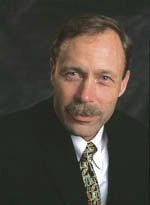
| Steen Riisgaard. |
These issues have been regarded so important that there was a special panel discussion. First of all, innovations are critical for finding new energy sources and modernising the existing ones. Second, necessary measures and incentives have to be performed to safeguard an improved innovation “platform” in Northern Europe.
Thus, CEO Steen Riisgaard from Novozymes, has come with a practical recommendation to use all kind of “renewable feedstock” for bio-fuels to increase input of agro-produce to boost investments in agriculture.
Vinnova’s CEO, Caren Skalman acknowledged that bio-refinery research could boost investments in transnational cooperation. In the “line of actions” – from raw materials to a final outcome, she added, all participants must be active, i.e. industry and universities, central and local government level, various incentives.
Environment
While participating in panels with the environmental issues in agenda I could not help remembering Kermit the Frog saying, it’s not easy being green. And this is particularly true nowadays with not a very optimistic time for businesses. However the BDF participants seemed to forget it. At the UN climate conference in Poznan, governments will probably agree to stick to various incentives, e.g. tax brakes, credit guarantees, risk cover, etc. to kick-start the green energy projects. None of these issues have been chosen as a theme under discussion.
However, no doubt certain interesting issues have been covered during the summit. In particular the burning issue of Baltic Sea pollution and contaminated debris from the WW2. Certainly, there is a perspective in combating water pollution; quite remarkable, said BDF chairman, Uffe Ellemann-Jensen that our region is striving to be a model for other regions to emulate and we are having such a polluted sea environment.
Regional ambitions
This issue has been discussed at the last extent – at the conclusion of the meeting – at the summit’s endnote session. The Baltic Sea region has witnessed during last four years impressive efforts of cooperation and dialogues on almost all important issues, e.g. energy security growth strategy, pollution prevention. Now that almost all the Baltic Sea surrounding countries belong to the European Union (except Russian territory on the east, Island and Norway –on the west) it is becoming easier to address those issues that are of common interest for prosperous cooperation. That is at the same time a challenge for the BDF itself: finding proper solution to a mixture of multilevel and horisontal governance in the regional affairs.
What is important, said BDF’s chairman, that we have sound strategy for the region which goes hand-in-hand with the EU’s Lisbon Strategy for innovations and sustainable development. Our main and strongest points are: creating forum for fruitful discussions, our drive for “ knowledge market” (as the 5th EU’s freedom) and clear structures for cooperation (as well as for coordination and optimal decision-making).
BDF’s participants: views and opinions
The opinions, vision and ideas of some of the BDF’s participants expressed during the panel discussions and BC’s interviews are as well important for a proper understanding of those processes that take place in the Baltic Sea Region (BSR). First of all, what BDF guests and prominent participants think about the most urgent issues facing the BSR. Some extracts follow below.
Anders Fogh Rasmussen, Prime Minister, Denmark:
BDF has great potentials for business and decision-makers in the region. Presently, most urgent is the task to follow and comprehend those EU and other institutions’ instruments that would be used in resolving present economic and financial crisis. Most important is not to subdue into deep pessimism, but get together providing fruitful background for cooperative work. Of course, most important are sustainable markets; therefore we do not have to loose the positive results we have acquired. So, the main spheres of development are transport, energy, R&D/innovations and new technologies. I would like to see more close cooperative contacts between universities and practitioners in order to resolve urgent regional problems. And I am both hands for new “green values” in the peoples’ consciousness and everyday life.
Tarja Halonen, President, Finland; winner of Swedbank Baltic Sea 2008 Award (she was awarded the price “for longstanding commitment to the solution of regional problems and efforts to protect Baltic Sea environment”).
Both politicians and businessmen are committed to this region; it is our ultimate duty to make this region a better place to live. More than that, we have to take all possible measures to prevent further pollution of the Baltic Sea.
 |
|---|
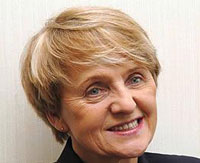
| Danuta Hubner. |
Danuta Hubner, EU Commissioner for Regional Policy:
Region’s advantage lies in highly educated people; therefore the connections between high education and science/research are evident. However, the disparities are there as well: the EU intends to devote 55-bln euro for cohesion policy for up to 2013. Region’s potential is in the active balance between all BDF’s participating partners: from public and private level, from science and industry. We have to learn how to make things differently.
Carl Bildt, Minister of Foreign Affairs, Sweden:
This Forum is an absolutely good platform for discussion and a perfect place to generate new ideas. Though we can hear that sometimes the BDF is called “elite project”, I would say that it is elitist in a good sense, i.e. meaning best in the region’s politicians, economists, decision-makers, etc.
As to the “common course” among the three Baltic States, it is in the process of building up: already good common denominators exit in foreign policy, energy structures, etc. However, in some states there are often more closer ties with other countries in the region – but that is due mainly to historic reasons.
Henrik Lax, Member of the European Parliament (Finland):
I was one of the BDF’s founding fathers and during all the 10 years’ history I kept finking that BDF is the best forum for people wanting “to make a difference”. What we are aimed at, actually, is building common identity, making politically sound messages, mastering people-to-people contacts, to mention a few directions.
Konstantin K. Khudoley, School of International Relations, Dean, St. Petersburg University, Russia:
Certain “common projects” can provide for better understanding between the EU and Russia while teaching young people and SMEs leaders along common tasks. That will extend cooperation and provide for confidence building.
Solidarity in integration
I’ve got a feeling that all the people at the summit have come to the BDF’s meetings not to express their own national interests (of course, exchanging of the national problems did take place, no doubt about it), but rather discussing what they could do for the prosperous Baltic region. I guess this is the best legacy of the previous ten years of fruitful cooperation among decision-makers, politicians, scientists and government officials. This is the BDF both best asset and endeavor at a time of crisis, when the EU member states explore a great deal of protectionism and isolationism.
The years ahead, Carl Bildt added at a closing session, are going to be quite tough, though Europe is much better prepared to handle the crisis: “we need short-term crisis management tools with long-term structural reforms and prospective solutions”. In such circumstances solidarity and integration are going to be the best helping tools.
Solidarity and integration are good words but they are hardly of a high up ranking in businessmen’s list of concerns nowadays The entrepreneurial community, meanwhile have almost entirely different impulse – to save their own balance sheets before saving the regional issues. This is what the BDF’s management has to remember until the market is able to provide us with more optimistic signals.





 «The Baltic Course» Is Sold and Stays in Business!