Analytics, EU – Baltic States, Financial Services, Latvia, Legislation, Taxation
International Internet Magazine. Baltic States news & analytics
Tuesday, 09.06.2026, 09:07
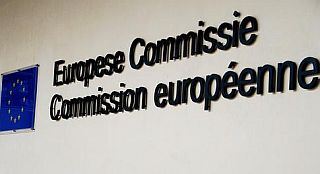
EU Commission notes significant shortcomings in Latvia's reforms
 Print version
 |
|---|
The report says that the mission has an impression that the key reforms, the implementation of which carries high risk of confrontation among the coalition partners, or which affect the influential interest groups, have been put on hold, while the less controversial reforms have been given the go-ahead. The decision-making process on the most important reforms is lengthy, especially when important legal documents are reviewed in Saeima, for instance, the Construction Law, Insolvency Law, Commercial Law, Civil Law and others, says the report.
Economic and budget implementation indices, including budget supervision, have been commendable since the surveillance mission's last visit to Latvia in November 2012. At the same time, the pressure for higher budget spending in the coming months will most probably increase, the mission predicts. The new fiscal framework, which came into force this year, has not yet been tested, and its actual effect will be clear when work on the 2014 budget commences.
The report reminds that the European Commission has repeatedly urged the government to reduce taxes on low-income residents, at the same time increasing excise taxes, property and natural resources taxes, as well as to continue the fight against wages paid under the table, smuggling and other forms of tax evasion, the European Commission's Representation in Riga informed LETA.
The Commission will continue to keep a close eye on the pending reforms and reforms that already are being implemented in Latvia. The Commission wants Latvia to have a more efficient system for determining target groups to receive social aid, and more efficient social policy already from 2014, that would be based on the results of the World Bank study to be released in the near future. The Commission has a high opinion of the proposals for improving higher and vocational education in Latvia, and the planned evaluation of scientific institutions in Latvia in collaboration with the Nordic Council of Ministers.
However, implementation of these measures has been slow, and the ruling coalition could have expressed stronger support for the reforms. Also, implementation of the Third Energy Package will be a test to the Latvian government regarding third parties' access to gas infrastructure until April 2014, which will demonstrate the government's resolve to honor its obligations to the EU, says the report.
The other tough tasks for the government include reforming the management of government-run companies from January 2014, increasing the funding for vocational education and the government's job market policy, fostering professionalism and motivation in the public sector, modernization of the judiciary system.
The report also says that Latvian authorities are well aware of the risks posed by non-resident deposits, and the recent decisions to limit such deposits deserve praise. It is important that the authorities continue to supervise the increasing non-resident deposits in the future, and pursue systematic control of such deposits. The government also has to step up measures against financial crimes and tax evasion, and the Competition Council needs to be given more powers.
The European Commission will release an extensive report on Latvia's reforms on May 29.
As reported, the European Commission's post-program surveillance mission was visiting Latvia May 13 to May 15 to assess the country's reforms.
This is the third post-program surveillance mission visiting Latvia. Latvia is subject to post-program surveillance until 75 percent of the EU-funded loan is repaid.
LETA also reported, on December 21, 2011, Latvia officially concluded its three-year international loan program, during which the country implemented stringent austerity measures to stabilize its finances after the economic downturn.
The planned amount of the international loan program was EUR 7.5 billion (LVL 5.25 billion). Nevertheless, the country got by with EUR 4.5 billion (LVL 3.16 billion).
Latvia borrowed a total of LVL 820.2 million from the IMF as part of the international loan program for the country. Last year, Latvia repaid the entire loan borrowed from the IMF before term.
According to the State Treasury, Latvia is to begin repaying the loan to the European Commission in 2014, when Latvia will return LVL 702.8 million to the Commission, followed by LVL 843.4 million in 2015, LVL 351.4 million in 2019 and LVL 140.6 million in 2025.
Also, Latvia must repay the World Bank a total of LVL 281.1 million from 2015 to 2020.









 «The Baltic Course» Is Sold and Stays in Business!