Analytics, EU – Baltic States, Legislation, Society
International Internet Magazine. Baltic States news & analytics
Tuesday, 09.06.2026, 07:45
European future: facing EU citizen’s year
 Print version
 |
|---|
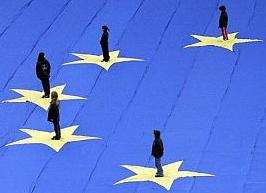
The latest Commission figures released on 17th of August 2012 have shown the people in the EU are quite active in discussions. On 9 May, Europe Day, the European Commission called on citizens all over the European Union to help set the policy agenda for the years to come and shape the future of Europe (see Press Release- IP/12/461).
Until 9 September, all Europeans can share their views on questions such as "How would you like the European Union to develop in the near future? In what kind of European Union would you like to live in 2020?"
EU citizenship
As is known, the EU citizenship does not replace national citizenship; it just complements it. Hence, all nationals of the EU-27 states have a set of additional rights as EU citizens. These include the right to vote and stand in local and European elections in the EU country they live in, the right to consular protection abroad under the same conditions as nationals, the right to petition to the European Parliament, as well as that of complain to the European Ombudsman, or to take part in a European Citizens' Initiative.
In addition, everybody in Europe can rely on the fundamental rights set out in the EU Charter of Fundamental Rights whenever EU law is applied by the EU institutions or implemented by national authorities.
The EU Citizenship Report 2010 (see IP/10/1390 and MEMO/10/525) outlined 25 concrete actions to remove the remaining obstacles to EU citizens exercising their right to free movement in the EU. One of these is to strengthen people's awareness of their EU citizenship status, their rights and what these rights mean in their daily lives.
The Commission therefore proposed to designate 2013 as the European Year of Citizens and to organise targeted events on EU citizenship and citizen-related policies throughout the Year.
During the European Year of Citizens in 2013, the Commission will publish a second EU citizenship report, to present further targeted initiatives to remove the remaining obstacles that hinder citizens from fully enjoying their rights as EU citizens.
Extensive debate
As Europe is facing major challenges, generally, due to financial and sovereign debt crisis, political debate is increasingly becoming a debate about the near and long term future of Europe. At the last European Council in June 2012, member states’ leaders discussed about the need to take Economic and Monetary Union (EMU) to a "new stage". However, any further integration in the economic and fiscal field needs to be legitimate in the eyes of the people of Europe.
This is why the report of the 'four Presidents' (the President of the European Council, the President of the European Commission, the President of the Eurogroup and the President of the European Central Bank), published on 26 June 2012, specifically stated: "Overall, closer EMU integration will require a stronger democratic basis and broad support from citizens. For this reason, it is essential that already the process towards realising this vision is based on wide consultation and participation. Integration and legitimacy have to advance in parallel."
Following a proposal from the Commission, 2013 is set to become the European Year of Citizens (see Press Release -IP/11/959). The European Commission wants to seize this occasion to take citizens on board when shaping the Union of tomorrow and listen to their visions for the future of Europe.
Commission’s opinion
The Commission’s Vice-President, Viviane Reding (she is at the same time the EU’s Commissioner for Justice, Fundamental Rights and Citizenship) emphasized on the occasion that “the on-going crisis had triggered a very necessary public debate about where Europe is heading”. For example, such proposals as “the EU Political Union”, a “European Federation” or even a “United States of Europe” have become again a subject of debate.
She added that in order to make Economic and Monetary Union truly irreversible and to regain peoples’ trust and confidence, it is important to give citizens and companies a perspective on what Europe will look like in 2020.
The Commission’s public consultation shows people’s strong interest in this debate, e.g. in particular that most of the responses are coming from young Europeans.
The Commissioner added her firm conviction that “we need more Europe, not less, to emerge from the crisis”. She concluded that “for this, we need our citizens on boards: Europe is after all about their rights, their concerns and their future; it is therefore the citizens that should guide us on our journey to a stronger, more integrated Europe."
Reference: Press Release, IP/12/904, 17 August 2012.
Removing obstacles
The Commission's consultation 'Your rights, your future' also asks the public about the very practical obstacles citizens face in daily life, when exercising their rights as EU citizens or when wanting to rely on fundamental rights enshrined in EU law. The Commission wants to learn about any difficulties Europeans encounter, be it when travelling in Europe, when moving across borders, when voting or standing as a candidate in elections, or when shopping online. The input received will feed directly into the Commission's policy agenda for the coming years and will form the basis for the 2013 EU Citizenship Report, to be presented on 9 May 2013, next year's Europe Day.
After more than three months after the on-line consultation started (it kicked off on 9 May 2012), over 5,000 people have taken part in the process and answered the online questionnaire. This includes citizens from all EU states (for example, 11,3 % of respondents are French, 10,5 % Italian, 9 % Spanish, 8,9 % German and 6,1 % are British; the Baltic States are not very active – Latvians with about 2% of respondents is the highest, see how the figures in the Table 1 below).
The short questionnaire can be completed online and the consultation will be open until 9 September.
See more on: http://ec.europa.eu/your-rights-your-future.
For more information see:
· Homepage of Vice-President Viviane Reding, EU Commissioner for Justice, Fundamental Rights and Citizenship:
· About Vice-President Reding's future vision of Europe:
http://ec.europa.eu/commission_2010-2014/reding/eufuture/index_en.htm
· About Vice-President Reding's vision for the further development of the EU Charter of Fundamental Rights, in:
· Tallinn speech: SPEECH/12/403
· On public consultation:
· On EU Citizenship:
http://ec.europa.eu/justice/citizen
· Newsroom of Directorate-General Justice:
http://ec.europa.eu/justice/news/intro/news_intro_en.htm
Table 1. Breakdown by nationality in the Baltic Sea region (total number of replies-5662):
|
Germany |
8.9% |
|
United Kingdom |
6.1% |
|
Poland |
5,6% |
|
Latvia |
1.8% |
|
Finland |
1.2% |
|
Sweden |
1.1% |
|
Estonia |
0.8% |
|
Denmark |
0.7% |
|
Lithuania |
0.5% |
Table 2. Breakdown by the replies’ age group:
|
|
% of total number of replies (5662) |
|
18-30 years old |
33.8% |
|
31-45 years old |
31.1% |
|
46-65 years old |
22.3% |
|
Over 65 years old |
4.9% |
|
Less than 18 years old |
1.1% |
|
N/A |
6.8% |








 «The Baltic Course» Is Sold and Stays in Business!