Analytics, Employment, Estonia, Financial Services, Legislation, Taxation
International Internet Magazine. Baltic States news & analytics
Tuesday, 09.06.2026, 13:19
Estonian employers: time for our proposals is ripe
 Print version
 |
|---|
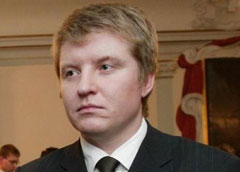
| Tarmo Kriis. |
“There is a suitable environment for making such proposals,” commented the chairman of the Confederation of Employers Tarmo Kriis when speaking about the document.
When speaking about the response on the proposals from the chairman of the Confederation of Trade Unions Harri Taliga who asserted that the manifesto was a sign of social irresponsibility, Kriis estimated that the positions in the document must have been strong indeed if the trade unions leader is of such an opinion.
Chairman of the council of the Confederation of Employers Enn Veskimägi expressed his hope that the manifesto would find its place on the desks of the next composition of Riigikogu that is to be elected in March and would also be a basis for making several necessary changes. He added that the previous manifesto had such a prominent position.
Kriis remarked that the organisation’s proposals should contribute to boosting the economy. When speaking about the points in the manifesto in greater detail, he noted that the public sector ought to cut its spending. “We should more contribute and invest in developing our e-services, merging State authorities in order to promote greater competition among officials,” he proposed.
According to him, there are currently two sides in Estonia – civil servants and private sector employees. “I would like to see young people to opt for careers in businesses instead of civil service; today the public sector with the average pay fund is still ahead of the private sector and the difference was particularly great during the crisis,” explained Kriis.
Kriis also said during the presentation of the manifesto that Estonia must change its current system where it was not desirable to burden the population with taxes. According to him, the State needs to find an answer to the question how the burden of social tax could be divided between employers and employees. The Confederation of Employers stated in its new manifesto that on the basis of other countries’ practices, social tax ought to become a tax that has to be paid by employees.









 «The Baltic Course» Is Sold and Stays in Business!