Analytics, Economics, EU – Baltic States, Financial Services
International Internet Magazine. Baltic States news & analytics
Tuesday, 09.06.2026, 12:41
European Commission’s president reveals challenges and shows perspectives
 Print version
 |
|---|
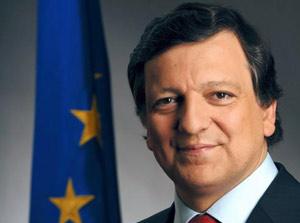
The European Union stands at a key moment in the start of the century’s second decade: the new Treaty of Lisbon and a new Commission are the main parts of the changes. This “fresh start” comes at a time of real challenges, argued Commission’s president, J.M.Barroso, describing the EU transformations needed to meet these challenges.
“The economic situation remains very fragile. It seems that the global recovery will be slow. Business and industry are seeing tough times. And most importantly, we are facing the very real prospect of high unemployment”. With these words, the Commission’s president addressed European Financial Services Roundtable, which took place on 4 February 2010 in Brussels.
José Manuel Barroso, President of the European Commission. Statement at the European Financial Services Roundtable, Speech 10/20, Brussels, 4 February 2010
The crisis has shown that the EU and the member states are interdependent within the global economic issues. The EU tried to turn the interdependence into an asset using the advantages that are delivered by the single market, the euro, and prepared structural reforms. It all helped to overcome the economic and financial problems. Equally the crisis has shown that the EU and the member states under-estimated both the incurred risks and the consequences.
Unilateral responses and initiatives by Member States are not enough for survival: “the last year has reminded us of the need to work together towards our goals”, admitted the Commission’s president. “The crisis has shown how important it is to continue to accelerate the modernisation of our economies and shift towards a more prosperous, more responsible and stronger future”, he added.
Transforming the EU future
The Commission’s president underlined main strategic components and opportunities that the EU has had to transform its future for the next decade.
The new Commission’s first proposal is to prepare a successor to the Lisbon Strategy for Growth and Jobs, i.e. the new EU-2020 strategy. It will be both a structural reform strategy as well as an exit and recovery strategy with the emphasis on enhanced economic coordination.
The aim of the EU-2020 strategy is to make Europe a more competitive, innovative and attractive place, i.e. “a smartly regulated environment in which people want to do business and invest, with its commitments to inclusive and sustainable economy”, said the president.
The next Commission’s steps is towards practical changes in the single market in services, particularly in the more tradable sectors, such as professional services. With the EU’s changing demographics, it needs a boost to the health and social services. The insurance and pensions industry is central in this regard; the demographic time bomb would put public finances under increasing strain and people would be forced to make some provisions for their own retirement. The financial services can assist in this regard; therefore, the EU financial sector must be tailored intelligently to ensure that citizens can have some safeguards in the future, argued Commission’s president.
A fresh approach is needed to intellectual property rights, such as patents, fostering growth of knowledge-based firms and removing barriers to the cross-border provision of venture capital.
In that context, the Commission proposed an Alternative Investment Fund Managers Directive as the “European passport” for private equity fund providers.
Another step is encouraging innovative start-ups by tapping the full potential of the digital economy: high-speed fiber and wireless networks are essential for the transition to “Digital Europe”, which would take concrete steps towards the completion of the EU Online Single Market.
As soon as the EU’s innovative economy implies people’s more frequent job changes, the Commission’s emphasis will continue to be on flexicurity and lifelong learning, with major exercises aimed at forecasting future skills needs. These steps would aim at better educational and training targets and changes in offered training in the EU (with an intelligent common approach to economic migration in the region).
The EU commitment to energy, transport and climate changes provide for major incentives in energy efficiency in the next five years with a clear focus on developing the “European energy super grid”. The Copenhagen Accord (December 2009) has been a significant step on the road to a low carbon future and green economy.
Financial sector
One of the central issues in the new EU-2020 strategy is the responsible and intelligently regulated financial markets. The EU has been in the lead in driving forward the necessary changes to repair financial markets: “we have been steady and predictable in the way we have implemented this agenda”, argued the president.
The financial sector’s reform started in the EU in March 2009, building on the work of the High Level Group under Jacques De Larosière; the group during 4 months prepared a framework for European financial sector’s survival. The group’s ideas shaped the direction of the G-20 work in 2009, in particular, concerning the global standards for the financial supervisory structures.
Shared international commitments require an adequate Union’s response, for example, in the example of bank officials’ remuneration the Commission will continue its legislative work to ensure that responsible remuneration policies become the norm across all financial sectors.
The EU has already revised the Capital Requirements Directive in order to strengthen the rules on remuneration in the banking sector without the former perverse incentive systems which can only lead to short-term advantages and excessive risk-taking.
The debate on further strengthening capital requirements directive, CRD IV will proceed in 2010 with its impact on assessment and calibration: the assessment of cumulative impacts at global and the EU level, as well as calibration on such issues as leverage ratio rights and international compatibility.
As to the structural reform in the banking sector, which all European Member States agree is urgently needed, the EU has had already debates with the international partners. The fundamental goals of financial market reform should be the same worldwide, as all countries reaches for a reliable and sustainable banking sector able to provide a steady supply of affordable credits to the real economy, argued the president.
Bank lending has weakened significantly since the beginning of the crisis. And while this is perhaps explained by the low levels of demand for credit at the moment, it would be very worrying if the negative trend continued once the recovery takes hold.
Banks play a valuable, indeed an indispensable role in the economy and the Commission wants a thriving banking industry in Europe with a responsible role to play.
The EU-2020 strategy, so-called “transformational agenda” cannot succeed without banks being prepared to lend to the forward-looking businesses that will drive change, concluded the president.








 «The Baltic Course» Is Sold and Stays in Business!