Analytics, Baltic States – CIS, Estonia, Truck haulage
International Internet Magazine. Baltic States news & analytics
Tuesday, 09.06.2026, 07:00
Estonian petrol buyers extend Narva border queues
 Print version
 |
|---|
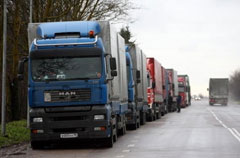
Around a thousand cars are waiting in Narva every day to cross the border to Russia and at worst case they have to be in the queue for over two days.
Vladimir Mizhui, the Head of Transservis-N Transit Company that belongs to the city of Narva estimated that only 5-10% of those in the border queue are people who go to Russia as tourists or on business. Everyone else is going to the border town Ivangorod to fill up their petrol tanks to the brim and go back across the border to Narva.
Mizhui says that the main reason for such a business is growing joblessness. In Russia, petrol is almost two times cheaper than in Estonia and besides, owners of the so-called “grey passports” – people without citizenship, can go there without a visa.
While earlier a lot of inhabitants of Narva earned income by selling cheap cigarettes they brought from Russia, since July last year, people can have on them just two packs of cigarettes at a time when coming to Estonia from Russia.
Mizhui said that there are a lot o taxis in Narva that use only Russian fuel and thus have much cheaper fares.
A jobless man, who is involved in such fuel business, and requested to remain anonymous, said that when he had a job, he brought fuel from Russia only for his own use. Now he can earn up to 3,000-4,000 kroons maximum a month with the fuel trade. A litre of petrol in Ivangorod costs nearly 9 kroons, in Narva it is sold for 12 kroons a litre and in an official petrol station the cost would be 17 kroons a litre.
Estonian Tax and Customs Board Eastern tax and customs centre customs administration department head Aleksandr Saltykov said that around 40-50% of local people who cross the customs line with cars bring fuel for themselves and don’t sell it. Selling it is illegal. Still, the board estimates that the volumes of such fuel business are rather small.
Saltykov said that it is estimated that out of a thousand cars that cross the border 10% do it for cheaper fuel, of whom around a half may do it with the intention of selling fuel.









 «The Baltic Course» Is Sold and Stays in Business!